I flew with the same three bags I packed at home: Pelican 1535 carry-on for the radio and amp, a personal bag for the laptop and small stuff, and a Pelican 1615 checked with the antenna, mast, coax, and tools. The IC-705 and JUMA stayed with me. I was not checking those.
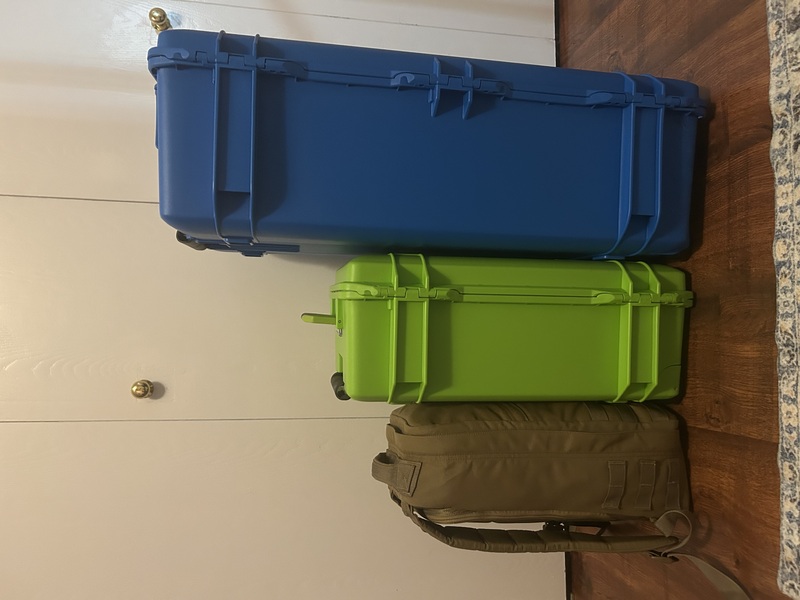
Security had questions about the radio gear. I got through. On Eleuthera the rental car was waiting, I drove to the cottage, and everything showed up in one piece.
First look at the QTH
The cottage has some outdoor space, but once I walked it, antenna options were tighter than they looked from the pics. Power lines nearby, and the house sits closer to the only decent antenna area than I’d like.
I decided to get on the air first and move things if I had to.
Antenna
I put the 40, 20, 15, and 10 meter vertical up on the Spiderbeam mast not far from the cottage, laid radials, and SWR was fine on all four bands.
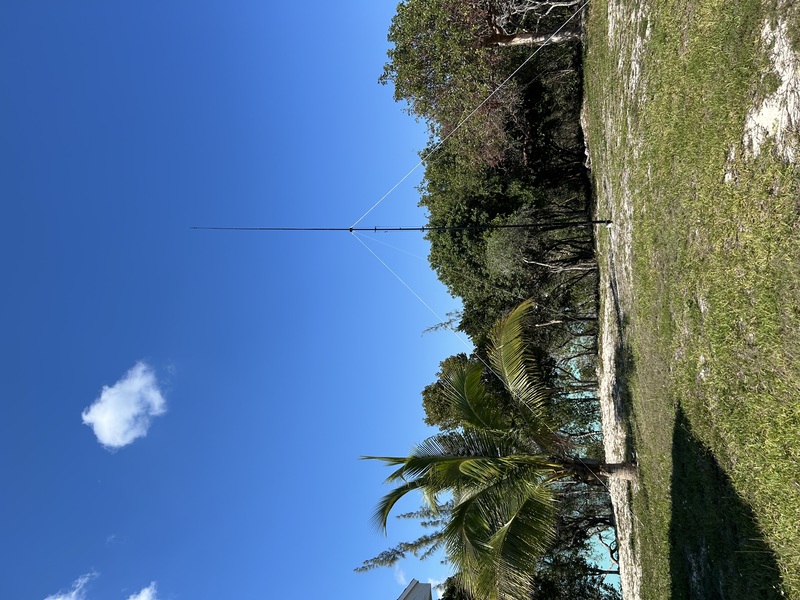
Station
With the antenna up, the IC-705, JUMA PA-1000+, and the rest went together the same way they did at home. First case open to a live station: about an hour.
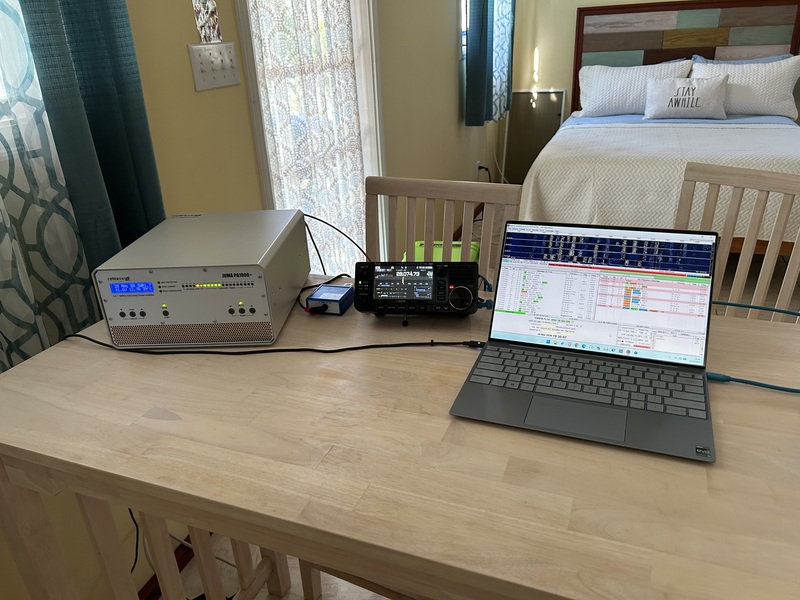
Radio config and logging were already set before I left, so this part was just the physical layout.
First QSOs
I started on digital to make sure TX and RX were actually working. Contacts came quickly. The basic setup works.